Hydrovac Services
Expose buried utilities precisely — without damaging them.
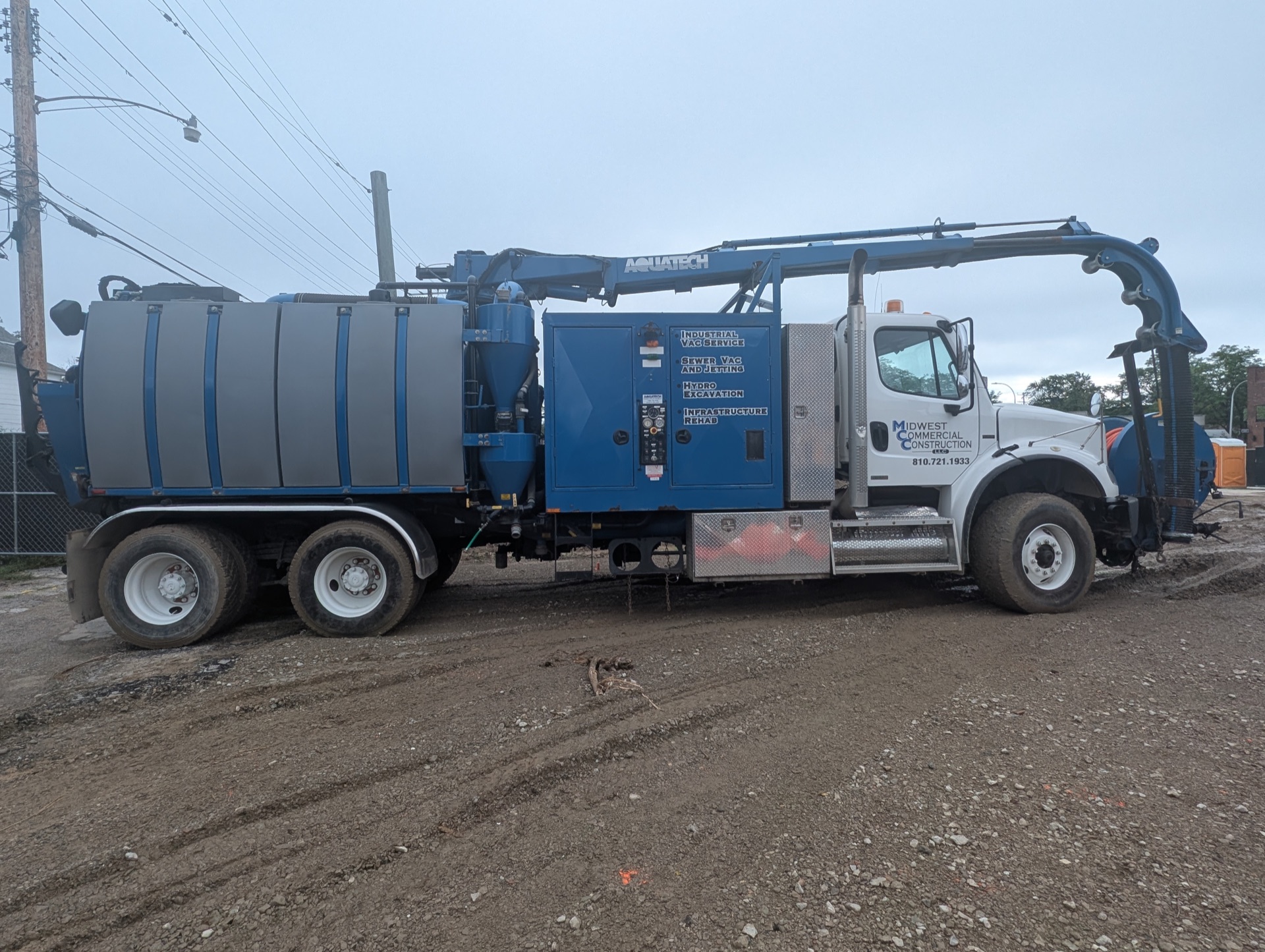
Midwest Infra provides precision hydrovac excavation services for utility potholing, subsurface investigation, and non-destructive excavation throughout Michigan. Our hydrovac units combine pressurized water injection with high-powered vacuum to break up and extract soil cleanly and precisely — without the risk of mechanical damage to buried infrastructure.
Hydrovac is the safest excavation method available for exposing buried utilities. Unlike mechanical excavation, which can sever gas lines, fiber optic cables, water mains, and electrical conduits, hydrovac allows field crews to daylight utilities with millimeter-level precision. This dramatically reduces the risk of service outages, environmental incidents, and contractor liability.
Our hydrovac service supports a wide range of applications — from single-utility potholing for pre-construction verification to large-scale multi-utility exposure corridors and catch basin cleanout in active traffic environments. We operate in confined, urban, and environmentally sensitive areas where conventional equipment cannot safely work.
Asset Types Served
- Gas Lines
- Water Mains
- Electrical Conduits
- Fiber Optic
- Storm Sewers
- Sanitary Sewers
- Catch Basins
- Foundation Zones
Pre-Construction Utility Potholing — Buried Utility Verification
A pre-construction corridor required precise exposure of crossing gas, water, electrical, and fiber optic utilities before design-build work could proceed. Given the density of buried services and the zero-tolerance risk for outages, mechanical excavation was not permissible. Hydrovac potholing was conducted across the full project corridor — safely daylighting each utility, confirming exact depth and offset, and delivering field documentation to the project engineer without a single service disruption.
- Safe exposure of gas, electrical, water, and fiber optic utilities — no mechanical risk
- Utility depth, offset, and material type field-documented for project engineer records
- Operated in active urban corridor where mechanical excavation was not permissible
How We Execute
Pre-Excavation Research & Locate
Prior to mobilization, our team reviews as-built drawings, utility atlas records, and MISS DIG locate markings. Utility conflict analysis identifies the exact excavation zone and anticipated depth range for each buried service, allowing our crew to plan the approach and set equipment parameters.
Pressurized Water Injection
Targeted water jets are introduced at the excavation zone, breaking up native soil and separating it from buried utilities. Water pressure and flow rate are calibrated to the soil type — cohesive clay, granular sand, or consolidated fill — ensuring efficient excavation without structural impact on the utility.
Simultaneous Vacuum Extraction
As the pressurized water breaks up soil, the vacuum system immediately extracts the resulting slurry into the onboard debris tank. This continuous simultaneous operation prevents slurry accumulation in the excavation zone and keeps the work area clean, safe, and visible throughout.
Spoils Management & Documentation
Extracted spoils are transported off-site or stockpiled per project specification. Utility depths, offsets, and material types are field-documented and provided to the project engineer. Excavation zones can be backfilled with flowable fill or native material per owner direction.
Ready to Rehabilitate
Your Infrastructure?
Our team is ready to assess your project and deliver a scoped rehabilitation plan. Contact us today for a consultation.